You Won’t Believe These Hidden Public Spaces in Kotor
Nestled between rugged mountains and shimmering waters, Kotor, Montenegro, is more than just a postcard-perfect town. Beyond its famous walls and crowded squares lie quiet, overlooked public spaces—hidden courtyards, stone-paved terraces, and seaside benches where locals unwind. I wandered off the beaten path and discovered a side of Kotor few travelers see. These spots aren’t on most maps, but they hold the soul of the city. They offer moments of stillness, glimpses into everyday life, and a deeper connection to a place often experienced only through its most photographed facades. In a world where travel can feel rushed and performative, these hidden corners invite us to slow down and truly be present.
The Magic of Kotor’s Undiscovered Corners
Kotor’s Old Town, a UNESCO World Heritage site since 1979, draws increasing numbers of visitors each year. Encircled by medieval stone walls that climb dramatically into the sky, the town is celebrated for its well-preserved architecture, narrow alleyways, and vibrant main squares. The influx of tourism has brought economic benefits, yet it has also concentrated crowds in predictable zones—especially around the Sea Gate, St. Tryphon’s Cathedral, and the base of the fortress stairs. While these landmarks are undeniably impressive, they represent only one layer of Kotor’s identity.
Just steps away from the busiest pathways, quieter rhythms persist. In these overlooked spaces, daily life unfolds without fanfare. Elderly residents sip coffee on low walls, children dart between archways, and fishermen mend nets in shadowed corners. These areas are not curated for visitors; they are lived-in, authentic, and deeply rooted in local tradition. What makes them special is not grandeur but intimacy—the sense that you are witnessing something real, not rehearsed.
For the mindful traveler, these hidden public spaces offer more than just respite from the crowd. They provide access to the town’s emotional landscape. A bench by the water, a sunlit courtyard, or a shaded staircase can become a window into the community’s values—slowness, connection, resilience. Photographs taken here feel more honest, not because of perfect lighting or composition, but because they capture life as it naturally occurs. In seeking out these places, travelers shift from passive observers to quiet participants in the town’s daily story.
Moreover, discovering these spots requires no special access or expense. They are open, free, and woven into the urban fabric. This democratization of beauty is part of what makes Kotor so special. The town does not reserve its charm for ticketed attractions; it spills generously into the streets, courtyards, and waterfront edges. The challenge—and the reward—lies in knowing where to look and when to pause.
The Secret Courtyard of Trg od Oružja (Armory Square)
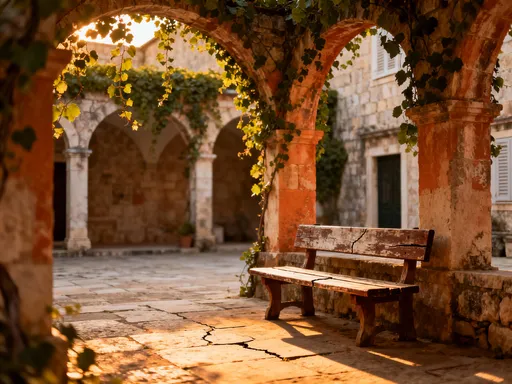
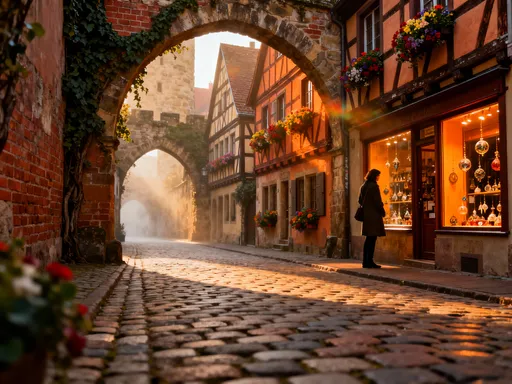
Just off the bustling Trg od Oružja, one of Kotor’s main public squares, a narrow archway leads to a secluded courtyard often missed by even the most attentive visitors. Tucked behind weathered stone walls and draped in ivy, this quiet space feels like a secret whispered by the city itself. While tourists gather under the open sky of the square, drawn to the grand facades of historic palaces, few step through the low entrance that opens onto this hidden retreat.
The courtyard is modest in size but rich in atmosphere. Arched doorways frame views of the surrounding buildings, their stonework softened by time and lichen. A pair of stone benches, worn smooth by decades of use, invite quiet reflection. Sunlight filters through a canopy of climbing vines, casting dappled patterns on the ground. The air here is cooler, quieter, carrying only the faint echo of footsteps and the occasional murmur from a passing local.
This space functions as a natural pause in the rhythm of the day. Shopkeepers step in for a moment of rest during busy hours. An older woman might sit with a book, her bag resting beside her. Sometimes, a traveler who has stumbled upon the spot will sit in silence, absorbing the calm. There are no signs, no benches labeled for tourists, no plaques explaining historical significance. And yet, the place feels deeply intentional—a pocket of peace designed not for spectacle but for presence.
To experience this courtyard at its most serene, timing is key. Early morning, just after sunrise, is ideal. The light is soft, the air fresh, and the town is still waking. By midday, the warmth intensifies, and the shadows retreat. Late evening, as the sun dips behind the mountains, brings another kind of beauty. The stones retain the day’s warmth, and the space glows in the golden aftermath. Visiting during these quieter hours allows for a more intimate encounter—one that feels personal, almost private, despite being in the heart of the Old Town.
Seaside Benches Along the Bay’s Quiet Stretch
While most visitors gather near the main cruise ship docking area or the lively promenade by the marina, a quieter stretch of the bay lies just a short walk east of the Sea Gate. Here, the urban energy begins to fade, replaced by a more contemplative atmosphere. Along this less-trafficked shoreline, a series of simple stone benches face the water, offering unobstructed views of the bay and the surrounding peaks.
These benches are not ornate or marked with plaques. They are functional, built from local stone, and blend seamlessly into the landscape. Yet their simplicity is part of their charm. They are used daily by locals—fishermen preparing their lines, couples sharing quiet conversations at dusk, or retirees watching the boats drift across the water. There is no rush here, no pressure to move on to the next attraction. Time moves differently in this corner of Kotor.
The sensory experience is profound. The sound of waves lapping against the shore is steady and soothing. The scent of saltwater mingles with wild rosemary and thyme growing along the rocky edges. In the late afternoon, the mountains across the bay glow in golden light, their reflections shimmering on the water’s surface. On clear days, the silhouette of Perast and the island of Our Lady of the Rocks can be seen in the distance, adding depth to the view.
Reaching this spot is simple. From the Sea Gate, follow the coastal path eastward, passing small cafes and private docks. After about ten minutes, the density of buildings thins, and the path opens to a more natural shoreline. The benches appear gradually, placed at intervals where the terrain allows. There are no crowds, no souvenir stands, no loud music—just the quiet hum of nature and the occasional greeting from a passing local. For travelers seeking a moment of stillness, this stretch of the bay offers one of the most authentic experiences in Kotor.
The Forgotten Terrace Behind St. Nicholas Church
Just a few minutes’ walk from the harbor, nestled behind the modest St. Nicholas Orthodox Church, lies a small open terrace that serves as an informal gathering place for residents. Unlike the grand plazas or scenic overlooks promoted in guidebooks, this space is humble and unassuming. There are no benches, no lighting, and no signs. Yet it is alive with the rhythms of daily life.
The terrace is elevated slightly above street level, offering a partial view of the bay through the gaps between buildings. On sunny afternoons, elderly men gather to play dominoes or chat on folding chairs. Children run and laugh, using the open space as an impromptu playground. Pigeons circle above, landing on the church’s domes before scattering across the stone floor. A clothesline stretches between two walls, fluttering with laundry in the breeze. This is not a curated public space—it is lived-in, functional, and deeply local.
What makes this terrace meaningful is its role in community life. In Mediterranean towns like Kotor, public spaces are not just decorative; they are essential to social cohesion. They serve as extensions of the home, places where neighbors connect, news is shared, and traditions are passed down. This terrace, though small, plays a quiet but vital role in maintaining the fabric of daily life. It is a reminder that urban design does not need grandeur to be valuable.
For visitors, the key to appreciating such a space is respect. It is not a photo opportunity to be exploited, nor a backdrop for social media content. It is a living environment. Observing quietly, moving gently, and speaking softly allows travelers to witness this slice of local life without disrupting it. Sitting on the edge of the terrace, even for a few minutes, can offer a deeper understanding of how Kotor’s residents experience their city—not as a monument, but as a home.
How to Find Authentic Public Spaces in Any Destination
The experience of discovering hidden corners in Kotor offers a valuable lesson for travelers everywhere: the most meaningful moments often occur when we step away from the expected path. While guidebooks and apps provide useful information, they tend to focus on major landmarks, leaving out the quieter, more personal spaces that define a place. Learning to find these spots requires a shift in mindset—from seeking destinations to cultivating awareness.
One of the most effective strategies is to walk slowly. Rushing from one attraction to the next limits perception. Moving at a leisurely pace allows the senses to tune in—to notice a narrow alleyway, a patch of shade, or the sound of laughter coming from a courtyard. Slowness creates space for discovery. It also increases the likelihood of encountering locals going about their day, whose movements often reveal the true centers of community life.
Another powerful tool is observation. Pay attention to where people gather informally—where they sit, rest, or socialize without commercial influence. Look for repeated footpaths worn into the ground, hand-painted signs in local script, or clusters of chairs outside homes. These subtle cues indicate places of organic use. Similarly, shaded areas, water features, or elevated viewpoints often become natural gathering spots, even if they are not officially designated as such.
Reducing reliance on GPS can also enhance exploration. While digital maps are helpful for navigation, they often prioritize efficiency over experience. Following a screen can lead travelers directly to a destination while bypassing the interesting detours in between. Occasionally turning off the phone and trusting intuition—or asking a local for directions—can open unexpected pathways. A simple question like “Where do you like to relax near here?” can lead to a recommendation far more valuable than any top-ten list.
Finally, embracing silence and stillness increases the chances of meaningful discovery. Sitting in one place for ten or fifteen minutes allows the environment to reveal itself. Patterns emerge—the rhythm of foot traffic, the shift in light, the way people interact with the space. These quiet observations often lead to insights no tour guide can provide. In Kotor, as in many historic towns, the magic is not always in motion; sometimes, it is in the pause.
Why Public Spaces Matter in Travel Culture
Public spaces are more than just physical locations; they are reflections of a community’s values, history, and way of life. In European towns like Kotor, urban design has traditionally emphasized shared outdoor areas—squares, fountains, promenades—where social life unfolds naturally. These spaces are not afterthoughts; they are central to the town’s identity. They foster connection, encourage interaction, and support a slower, more grounded way of living.
Contrast this with overly commercialized tourist zones, where every square meter is optimized for profit. In such areas, benches are removed to prevent loitering, music is piped in to create artificial energy, and interactions are transactional. While these spaces may be visually appealing, they often lack soul. They cater to consumption rather than contemplation, movement rather than stillness. The result is a travel experience that feels superficial, even exhausting.
Kotor’s hidden public spaces offer an alternative model. They demonstrate how beauty and function can coexist without commercialization. A stone bench by the water is not there to sell a view; it is there to serve the community. A courtyard is not a photo op; it is a place of rest. These spaces thrive because they are useful, accessible, and integrated into daily life. They remind us that the best urban environments are those designed for people, not just for profit.
For travelers, engaging with such spaces leads to more meaningful, sustainable tourism. Instead of collecting destinations like stamps, visitors begin to understand the rhythm of a place. They see how people live, what they value, and how history shapes the present. This deeper awareness fosters respect and connection. It also supports local economies in a more balanced way—by appreciating existing culture rather than demanding constant adaptation for tourist consumption.
Moreover, these spaces contribute to well-being. Studies have shown that access to quiet, green, or scenic public areas reduces stress and enhances mood. For travelers, who often face the pressures of planning, navigation, and cultural adjustment, such spaces offer essential relief. They provide a chance to reset, reflect, and reconnect with the purpose of travel—not just to see, but to feel.
Final Thoughts: Travel Deeper, Not Just Farther
Kotor’s fortifications are impressive, its cathedral magnificent, and its views breathtaking. But the true essence of the town is not found in its most famous landmarks. It is found in the quiet courtyard where an old man reads the newspaper, in the seaside bench where a fisherman untangles his line, in the humble terrace where children play beneath the church bells. These are the spaces where life happens—unscripted, unhurried, and deeply human.
Modern travel often emphasizes distance, novelty, and quantity—how many countries visited, how many photos taken, how many boxes checked. But there is growing recognition that depth matters more than breadth. The most memorable journeys are not always the longest or the most exotic. They are the ones that allow for connection, reflection, and presence. They are the ones where we stop performing and start experiencing.
Kotor, with its layered history and intimate urban fabric, invites this kind of travel. It rewards curiosity, patience, and stillness. It reminds us that beauty does not always announce itself with fanfare. Sometimes, it waits quietly in a shaded corner, asking only that we sit down, look around, and listen.
So the next time you travel, consider this: instead of rushing to the next attraction, pause. Step off the main path. Follow a narrow alley, sit on a local bench, observe the rhythm of daily life. Let the city reveal itself in its own time. You may not find a famous monument or a perfect photo—but you might find something more valuable: a moment of genuine connection, a memory that stays with you not because it was planned, but because it was real.