Trincomalee’s Rugged Beauty: What No One Tells You About Its Tough Terrain
You know that dreamy beach escape in Sri Lanka? Trincomalee looks like paradise in photos — turquoise waters, golden sand, endless sun. But here’s what they don’t show: the steep trails, slippery rocks, and hidden challenges of its wild terrain. I learned the hard way. What seemed like a smooth island getaway turned into a lesson in smart hiking, proper shoes, and reading nature’s clues. This is real talk — not just the beauty, but the bumps beneath your feet.
First Impressions vs. Reality
Trincomalee greets visitors with a postcard-perfect coastline stretching along the northeastern shore of Sri Lanka, where the Indian Ocean glimmers under a wide tropical sky. The town’s colonial-era buildings, quiet temples, and sweeping bays promise serenity. From a distance, Fort Frederick appears as a historic silhouette perched above the sea, while Swami Rock rises like a sacred guardian overlooking the horizon. Tourists arrive expecting gentle strolls along flat sands and easy access to panoramic views — a misconception fueled by polished travel blogs and sun-drenched Instagram posts.
Yet within minutes of stepping off the main road, the reality shifts. The ground becomes uneven, scattered with jagged coral fragments, loose stones, and patches of cracked laterite. Even near well-known attractions, elevation changes are constant and often unmarked. Reaching the summit of Swami Rock, for instance, involves climbing a narrow, winding path with no handrails and sudden drops just steps from the edge. At Fort Frederick, visitors must navigate crumbling stone steps that vary in height and depth, worn smooth by centuries of wind and foot traffic. These are not leisurely promenades but modest hikes requiring balance, awareness, and preparation.
The disconnect between image and experience is most evident at secluded coves like Nilaveli’s back beaches or the hidden inlets near Kudumbigala. What looks like a short walk from the road can turn into a 20-minute scramble over boulders and exposed tree roots. Many travelers, dressed in sandals or barefoot, find themselves stranded or forced to backtrack. The lesson is clear: Trincomalee’s beauty is earned, not handed out. Its landscapes reward those who respect their complexity, not those who assume accessibility based on appearance.
Understanding Trincomalee’s Unique Landscape
Beneath Trincomalee’s scenic surface lies a geological story millions of years in the making. The region sits on ancient Precambrian rock formations, among the oldest on Earth, composed of crystalline granite and gneiss shaped by tectonic forces. Over millennia, coastal erosion and shifting landmasses have carved dramatic cliffs, sea stacks, and natural arches that define the shoreline. These same processes, while responsible for the area’s breathtaking vistas, also create inherently unstable terrain.
The soil composition adds another layer of challenge. Much of the coastal elevation consists of laterite — a rust-colored, iron-rich crust that forms in tropical climates. When dry, it provides firm footing, but after even brief rainfall, it becomes slick and treacherous. This is not sand that absorbs water; it’s a hardpan surface that turns into a natural slide under damp conditions. Hikers stepping onto a seemingly solid path after a passing shower may suddenly find their feet slipping without warning.
Additionally, the vegetation clings tightly to this rugged foundation. Tree roots snake across trails, partially buried and easily missed, especially in shaded areas. Rocky outcrops jut unexpectedly into pathways, forcing detours over uneven ground. Drop-offs are often concealed by low brush or sudden changes in light. Unlike the flat, groomed beaches of southern Sri Lankan resorts, Trincomalee’s wild edges remain largely untouched by engineering or safety modifications. This authenticity is part of its appeal, but it demands respect. Understanding that the land was shaped by powerful natural forces — not designed for human convenience — is the first step toward safe and meaningful exploration.
The Most Misleadingly “Easy” Trails
Some of Trincomalee’s most frequented paths carry an illusion of simplicity. The base trail around Swami Rock, for example, is often described as a short, scenic loop suitable for all ages. While the elevation gain is minimal, the trail surface tells a different story. Sections are paved with irregular stone slabs, some tilted or cracked, creating tripping hazards. Other parts wind through dense undergrowth where moss-covered boulders hide in the shade, their slick surfaces invisible until it’s too late. Parents with young children or older visitors may not anticipate how quickly a casual walk can become precarious.
Another commonly underestimated route leads to the Kanniya Hot Springs, a cluster of natural thermal pools tucked inland. The final approach involves descending a narrow staircase carved into the hillside. The steps vary in height — some as tall as 18 inches — and lack consistent railings. After rain, algae coats the stone, making each step a potential slip. Social media images show people relaxing in steaming water, but rarely depict the effort and caution required to reach them safely.
Even the path leading to the rear of Uppuveli Beach, often used as a shortcut between accommodations and the shore, crosses a rocky ridge with no protective barriers. A misstep near the edge could result in a fall onto sharp coral below. These trails are not marked with difficulty ratings, nor are warnings posted in multiple languages. As a result, many visitors proceed without realizing the risks. The danger isn’t in sheer altitude or distance, but in the subtle hazards: inconsistent footing, obscured vision, and overconfidence born from misleading visuals. Recognizing that low elevation does not equal low risk is essential for anyone venturing beyond paved roads.
Footwear and Gear: Why You Can’t Wing It
One of the most common mistakes visitors make is underestimating the need for proper footwear. It’s not unusual to see tourists attempting cliffside trails in flip-flops or bare feet, lured by the beachy vibe and warm weather. While comfortable on soft sand, these choices offer zero ankle support and minimal grip on rock or wet surfaces. A single misstep on a mossy stone or loose gravel can lead to sprains, cuts, or worse.
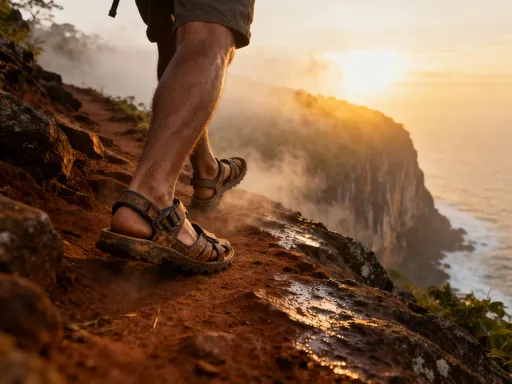
The right gear makes a measurable difference. Closed-toe hiking sandals with secure straps and rubber lug soles — such as those designed for water crossings — provide both breathability and traction. For more serious treks, lightweight trekking shoes with reinforced toes and slip-resistant outsoles are ideal. They protect against sharp coral, stabilize the ankle on uneven ground, and offer better control on descents. Trekking poles, though often overlooked by casual travelers, can be invaluable on steep or slippery sections, especially when returning tired after hours in the sun.
While small vendors near major sites sell bottled water, snacks, and basic hats, they rarely carry quality hiking gear. Travelers should bring essential items from Colombo or ensure their accommodations in Trincomalee town can provide recommendations. A small backpack with water, a light rain cover, and a basic first-aid kit completes the setup. Preparing in advance isn’t about overengineering the trip — it’s about respecting the environment. The right equipment doesn’t remove the challenge; it allows you to engage with it safely and confidently, turning potential hazards into manageable parts of the journey.
Timing and Weather’s Hidden Impact
Trincomalee’s weather patterns play a critical role in trail safety, yet many visitors overlook their influence. The region enjoys a relatively dry climate compared to the southwest coast, with its best conditions from May to September. However, brief, intense showers can occur even during the dry season, particularly in the late afternoon. These short rains may not last long, but they leave the laterite soil dangerously slick for hours afterward. A trail that was firm in the morning can become hazardous by midday if moisture sets in.
Temperature and sunlight also affect safety. Early mornings offer cooler temperatures and softer light, making it easier to spot cracks, holes, and obstacles on the path. The ground is typically dry, and wildlife activity is low. By contrast, midday sun creates harsh glare, especially on light-colored rock, which can obscure surface details. Shadows disappear, making depth perception difficult on uneven terrain. Heat exhaustion becomes a real concern, particularly for those unaccustomed to tropical conditions.
Seasonal shifts matter too. During the inter-monsoon periods, humidity rises, and sudden thunderstorms increase the risk of flash flooding in low-lying areas. Coastal winds can intensify, making exposed ridges unstable for walking. Travelers should check local forecasts and plan hikes accordingly. Sunrise excursions not only offer the safest conditions but also the most peaceful experience — fewer crowds, clearer air, and the chance to witness the landscape in its quietest state. Timing your visit with natural rhythms, rather than convenience, transforms a potentially risky outing into a rewarding and safe adventure.
Navigating Without Clear Signage
Unlike developed national parks in other countries, Trincomalee’s natural trails lack standardized signage, maps, or marked boundaries. There are no color-coded paths, information boards, or emergency call points along most routes. This absence of formal guidance means visitors must take responsibility for their own navigation. Relying solely on instinct or following others can lead to disorientation, especially in areas where multiple paths converge or fade into the brush.
Offline mapping tools are essential. Apps like Maps.me or Gaia GPS allow users to download detailed topographic maps before arrival, enabling location tracking even without mobile signal. These tools can show elevation changes, water sources, and approximate trail routes based on community data. Pairing them with a fully charged power bank ensures reliability throughout the day.
Another valuable resource is the local community. Residents of nearby villages — such as those around Kudumbigala or Seruvila — often know the safest and most scenic routes. Hiring a guide, even for a few hours, provides not only safety but deeper cultural context. They can point out sacred sites, warn of unstable ground, and suggest detours during wet conditions. It’s also a way to support local livelihoods.
Equally important is resisting the temptation to follow social media geotags blindly. Many popular photo spots are located on unprotected edges or private land. What looks like a safe perch in a photograph may require climbing over dangerous terrain to reach. Respecting boundaries — both physical and cultural — ensures personal safety and preserves the integrity of the landscape for future visitors.
Responsible Exploration: Protecting People and Place
Exploring Trincomalee’s rugged terrain comes with a quiet responsibility — to protect both oneself and the environment. The region’s ecosystems are fragile, shaped by centuries of natural balance. Straying from durable surfaces like rock or compacted soil accelerates erosion, especially on slopes where vegetation is sparse. Each footprint on loose soil contributes to gradual degradation, and repeated off-trail walking can create new, unsafe paths that others may follow without awareness.
Equally important is respecting sacred sites woven into the landscape. Swami Rock, for example, is not only a geological feature but a place of spiritual significance. Climbing restricted areas or disturbing offerings can cause offense and harm cultural heritage. Travelers should observe quietly, maintain a respectful distance, and follow any posted guidelines, even if they’re not strictly enforced.
Preparation is an act of stewardship. Bringing reusable water bottles reduces plastic waste, while packing out all trash ensures natural spaces remain pristine. Choosing eco-conscious accommodations and supporting local businesses that prioritize sustainability amplifies positive impact. When hikers prepare properly — with the right gear, knowledge, and mindset — they minimize risk and reduce strain on emergency services and natural resources.
The challenges of Trincomalee’s terrain are not flaws to be avoided, but integral parts of its character. They invite mindfulness, presence, and a deeper connection to the land. By embracing these demands with care and respect, travelers transform their journey from a simple sightseeing tour into a meaningful encounter with nature’s raw beauty. The reward is not just a stunning view, but the quiet pride of having arrived with awareness, integrity, and gratitude — steps taken with intention, on solid ground.