Lost in the Valley Where Time Forgets You
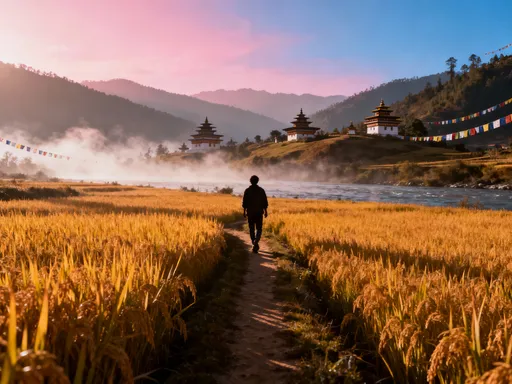
Nestled between towering peaks and whispering rivers, Punakha, Bhutan, is one of those rare places that feels untouched by time. I wandered through quiet rice fields, crossed ancient suspension bridges, and stumbled upon temples where monks chanted as they have for centuries. This isn’t just travel — it’s stepping into a slower, more meaningful rhythm of life. If you’re craving authenticity, Punakha delivers in ways you never expected. Here, the air carries the scent of pine and prayer flags flutter in the breeze like silent blessings. There are no neon signs, no rush hour traffic, no digital distractions — only the soft murmur of daily rituals and the steady pulse of nature. For women in their thirties to fifties who seek not just escape but renewal, this valley offers something deeper than sightseeing: a chance to remember what matters.
The Road Less Traveled: Why Punakha Still Feels Secret
Punakha may have once served as Bhutan’s ancient capital, but unlike Paro with its international flights or Thimphu with its growing urban footprint, this riverside valley remains refreshingly off the mainstream path. Its seclusion is no accident — carved by the confluence of the Mo Chu and Pho Chu rivers and shielded by steep Himalayan ridges, Punakha has long been protected by geography as much as by choice. Roads here are narrow and winding, discouraging mass tourism and preserving the unhurried pace of village life. While other regions have adapted to accommodate increasing numbers of visitors, Punakha continues to unfold at its own rhythm, shaped more by monsoon cycles and harvest seasons than by tourist itineraries.
What makes Punakha truly special is not just its beauty but its authenticity. You won’t find souvenir stalls lining every street or hotels competing for five-star status. Instead, daily life unfolds naturally — farmers tend terraced fields in conical bamboo hats, children walk to school along dirt paths, and elders sit outside whitewashed homes adorned with intricate woodwork. The absence of commercialization allows travelers to witness Bhutan not as a performance for outsiders, but as a living culture rooted in Buddhist values and environmental stewardship. This quiet dignity resonates deeply, especially for those who have spent years juggling careers, family demands, and societal expectations.
For many women in midlife, the appeal of such a place lies in its simplicity. There is no pressure to achieve, impress, or consume. You are not measured by your productivity or possessions, but welcomed simply for being present. In this way, Punakha becomes more than a destination — it becomes a mirror, reflecting back a version of oneself that has been buried beneath routines and responsibilities. Traveling here feels less like visiting a foreign land and more like returning to a forgotten part of your soul.
Beyond the Dzong: Discovering Punakha’s Quiet Corners
Most guidebooks lead visitors straight to Punakha Dzong, the majestic fortress monastery that rises like a dream from the river plain. And yes, it is breathtaking — with golden spires, red walls, and courtyards echoing with chants. But the true magic of Punakha often lies beyond its famous landmarks, tucked into the everyday corners where life unfolds quietly and sincerely. A short walk from the main road, down a footpath flanked by wildflowers, you might stumble upon a small village gompa where an elderly monk sweeps fallen leaves from a stone chorten. He may pause, smile, and invite you in for butter tea — not because you are a tourist, but because hospitality is woven into the fabric of Bhutanese life.
One morning, I followed a farmer’s wife through her rice field, where she showed me how to identify healthy seedlings and explained the importance of planting with the lunar cycle. Her hands were weathered, her voice gentle, and her knowledge passed down through generations. Later, we sat on a wooden bench outside her home, sharing a simple meal of red rice and spinach stew while her grandchildren played nearby. There was no agenda, no performance — just human connection in its purest form. These unplanned moments often leave the deepest impressions, especially for women who have spent years managing schedules and expectations.
Along the banks of the Mo Chu River, there are quiet meditation spots shaded by willow trees, where locals come to reflect, pray, or simply rest. Some are marked only by a small shrine or a stack of prayer stones. Sitting there, listening to the water ripple over smooth rocks, I felt a stillness I hadn’t known in years. It wasn’t emptiness, but fullness — a sense of being exactly where I needed to be. In a world that constantly demands more — more speed, more output, more attention — Punakha reminds us that presence itself is a gift.
Walking the Old Paths: Hikes That Lead to Peace, Not Just Views
In many destinations, hiking trails are marketed as challenges — steep ascents, summit photos, fitness goals. But in Punakha, the walks are different. They are not about conquering terrain, but about entering into it. The path from Chimi Lhakhang to Lobesa, for instance, winds through mustard fields glowing yellow in spring, past whitewashed chortens wrapped in prayer flags, and under arches of flowering rhododendron. There are no guardrails, no marked rest stops, just the occasional footprint in the mud and the distant sound of a cowbell.
Chimi Lhakhang itself, dedicated to the ‘Divine Madman’ Drukpa Kunley, is known for its playful symbolism and blessings for fertility, yet even here, the atmosphere is one of lighthearted reverence rather than spectacle. Pilgrims tie prayer scarves to the gates and circle the temple with quiet devotion. As I walked onward toward Lobesa, I passed women balancing baskets of firewood on their backs, men guiding oxen through narrow furrows, and children chasing each other through the fields. The trail doesn’t offer panoramic views or dramatic cliffs — instead, it offers intimacy with rural life, a chance to walk alongside people whose days are shaped by seasons, not screens.
What struck me most was the absence of urgency. No one rushed. No one checked a watch. Time moved with the sun, not the clock. For women who have spent decades managing households, careers, and aging parents, this slow rhythm can feel like healing. The body moves, the mind settles, and the spirit begins to remember how to breathe. These walks are not escapes from reality — they are returns to a deeper kind of truth, where meaning is found not in doing, but in being.
Sacred Seasons: Timing Your Visit to Match Local Rhythms
To visit Punakha is to step into a world where time is measured not by calendars but by nature’s cycles. Each season paints the valley in a different light, offering unique textures and experiences. Spring arrives in March and April, when the hillsides bloom with magnolia, jacaranda, and wild azalea. The air is cool and fragrant, fields turn lush green, and farmers begin transplanting rice seedlings — a delicate, labor-intensive process done entirely by hand. This is a beautiful time to visit, not only for the scenery but for the sense of renewal that permeates the land.
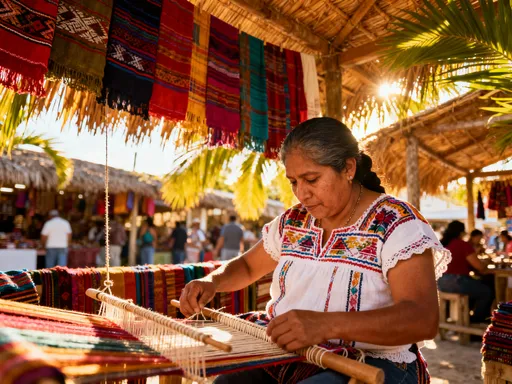
By June, the monsoon arrives, transforming Punakha into a world of emerald green. Rain falls in soft waves, mist curls around the hills, and the rivers swell with mountain melt. While some travelers avoid this season, those who come discover a different kind of beauty — one of quiet, moisture-rich stillness. Fewer tourists mean more space to wander, and the locals are often more at ease, tending to indoor tasks like weaving or preparing dried vegetables for winter. It’s a time for introspection, much like the reflective phases in a woman’s life after children leave home or careers shift direction.
Autumn, from September to November, brings clear skies and golden harvests. Rice fields shimmer in the sun, families gather to thresh and store grain, and the scent of drying crops fills the air. This is also the season of the Punakha Tshechu, a religious festival held at the Dzong with masked cham dances performed by monks. Unlike commercialized festivals elsewhere, this event is deeply spiritual — a communal act of merit-making, storytelling, and remembrance. The dances depict moral lessons and ancient legends, their movements precise and meditative. Visitors are welcome to observe, but expected to do so with respect — sitting quietly, dressing modestly, and refraining from intrusive photography.
Attending the Tshechu is not about entertainment; it’s about witnessing a living tradition. For many women, especially those navigating transitions in midlife, such moments offer powerful reflections on identity, purpose, and legacy. There is comfort in knowing that some things endure — not because they resist change, but because they evolve with grace.
Staying Like a Local: Homestays and Hidden Retreats
One of the most transformative choices a traveler can make in Punakha is where to stay. While a few modest hotels exist near the Dzong, the most meaningful experiences come from homestays — family-run accommodations nestled in villages, often just steps from rice fields or apple orchards. These are not luxury retreats, but warm, simple homes where guests are treated as honored visitors. Floors are scrubbed clean, bedding is freshly aired, and meals are prepared with ingredients grown just outside the door.
I stayed with a family in the village of Sama, where I slept in a traditional wooden house with hand-carved beams and a central hearth. Each morning, I woke to the smell of burning pine and the sound of the mother grinding chilies for breakfast. She taught me how to roll dough for buckwheat pancakes and showed me how to use a hand loom to weave a narrow strip of fabric. These small acts of sharing created a bond that no guided tour could replicate. Her daughter, a schoolteacher, spoke quietly about her hopes for her students and the challenges of rural education. Our conversations felt like exchanges between equals, not transactions between host and guest.
Staying in a homestay is not always comfortable by Western standards — bathrooms may be shared, hot water limited, electricity intermittent — but these minor inconveniences fade in the face of genuine connection. More importantly, this form of tourism ensures that income goes directly to families, not distant corporations. It supports local economies, preserves traditional skills, and fosters mutual respect. For women who value sustainability and meaningful travel, this model offers a way to explore the world without exploiting it.
Taste of Tradition: Flavors That Tell a Story
In Punakha, food is not just sustenance — it is memory, identity, and offering. Meals are simple but deeply flavorful, built around what the land provides: red rice from the valley floor, potatoes from higher slopes, cheese made from yak or cow milk, and vegetables grown in kitchen gardens. One evening, I sat cross-legged on a woven mat as the family served a feast of ema datshi (chilies in cheese sauce), spinach with garlic, and a fermented soybean dish called shisham. The mother explained that every ingredient had been harvested that week — the chilies from their garden, the cheese from a neighbor’s herd.
What stood out was not just the taste, but the intention behind it. Food is prepared with care, shared with gratitude, and never wasted. Even the youngest child knows to finish their plate. During a festival, meals are offered first to the altar, then to elders, then to guests — a daily practice of humility and respect. I was offered ara, a mild rice wine, during a ceremonial toast. It was warm, slightly sour, and served in a small wooden cup. Drinking it wasn’t about intoxication, but about participation — a way of saying, “We welcome you.”
For women who have spent years preparing meals for others, often without recognition, experiencing food in this context can be profoundly moving. Here, cooking is honored, ingredients are cherished, and eating is a communal act of love. It’s a reminder that nourishment goes beyond calories — it feeds the soul as much as the body. Returning home, I found myself slowing down at the stove, savoring the process, and inviting my family to the table with greater intention.
Traveling with Purpose: How to Visit Without Disrupting
Bhutan’s national philosophy of Gross National Happiness is not just a slogan — it shapes everything from education to tourism. Visitors are required to travel through licensed operators and pay a daily tariff that funds healthcare, education, and conservation. This model ensures that tourism benefits the country as a whole, not just a few. But beyond these policies, individual travelers can make choices that honor the spirit of this philosophy. Dressing modestly when visiting temples, asking permission before photographing people, and hiring local guides are small acts that build trust and show respect.
Equally important is the mindset we bring. Traveling with purpose means approaching Punakha not as a consumer, but as a guest. It means listening more than speaking, observing more than photographing, and giving more than taking. When I bought a handwoven scarf from a village artisan, I didn’t haggle — I paid what she asked, knowing her work took days and her income was modest. That scarf now hangs in my home, not as a souvenir, but as a reminder of her hands, her story, and the quiet dignity of her craft.
For women who seek depth in their travels, this approach transforms the journey from sightseeing to soul-seeing. It aligns with values of empathy, sustainability, and interconnection — qualities often nurtured through years of caregiving and community building. By traveling gently, we protect places like Punakha not just for ourselves, but for future generations who may also need to remember what silence feels like.
Carrying the Silence Home
Punakha does not change you with grand adventures or adrenaline rushes. It changes you in quieter ways — through the weight of a wooden water bucket carried from the well, the sound of a monk’s bell at dawn, the shared silence of a family eating dinner by firelight. It reminds you that happiness does not come from accumulation, but from attention. That meaning is not found in noise, but in stillness. For women who have spent years giving to others, this valley offers a rare permission: to slow down, to listen, to simply be.
The lessons of Punakha do not end when the journey does. They linger in the way you pause before speaking, in the care you take with a meal, in the quiet moments you choose over scrolling. They live in the decision to support local artisans, to travel with intention, to protect the fragile beauty of the world. Punakha teaches that some of the most powerful transformations happen not in motion, but in presence.
So if you feel the pull toward a place where time forgets you, where life moves at the pace of breath and tradition flows like a river, consider answering it. Not to escape, but to return — to yourself, to what is real, to what endures. Travel gently. Listen deeply. And carry the silence home, like a seed waiting to grow.